
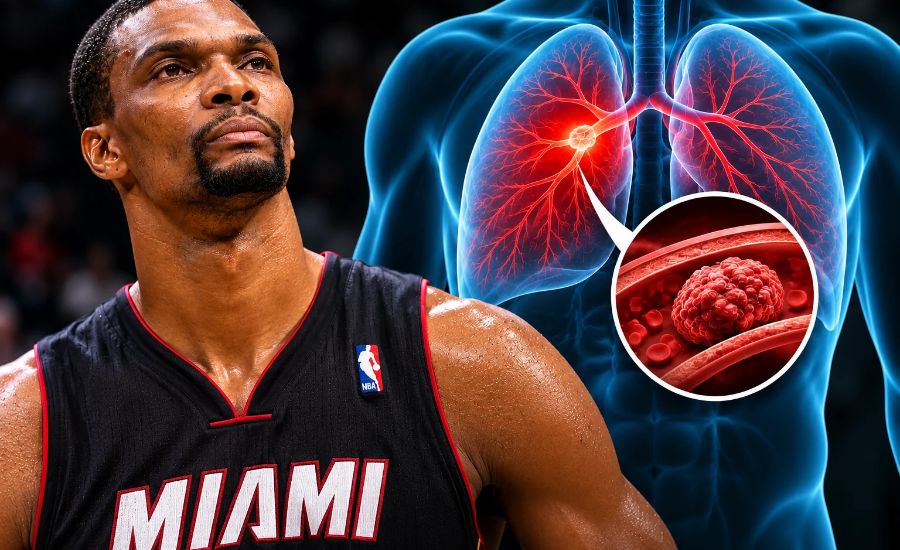

Being physically active, maintaining a healthy lifestyle, and having a history of professional athletic performance might seem like protection against serious health complications. However, the terrifying experience of former NBA superstar Chris Bosh serves as a powerful reminder that even elite athletes are not immune to potentially life-threatening medical emergencies.
The two-time NBA champion revealed that he nearly lost his life in January 2026 after suffering another pulmonary embolism, a dangerous condition in which a blood clot blocks blood flow through an artery in the lungs.
Speaking publicly about his experience in August 2026, Bosh described how unexpectedly the medical emergency unfolded, despite his previous history of blood clotting problems.
His experience raises an important question: How can a potentially deadly blood clot develop without someone realizing that anything is wrong?
A Medical Emergency That Nearly Ended His Life
Chris Bosh spent years competing at the highest level of professional basketball, becoming one of the most recognizable players of his generation.
However, blood clotting complications interrupted his successful NBA career and ultimately forced him away from professional basketball.
Years later, in January 2026, he experienced another frightening medical emergency.
In an interview with HoopsHype, Bosh revealed that he had suffered a pulmonary embolism and nearly died. He recalled losing consciousness and subsequently finding himself covered in blood.
Perhaps the most alarming aspect of his experience was that, according to Bosh, he had not noticed symptoms before the incident.
The experience reinforced the importance of following medical treatment, taking prescribed medication, and continuing to monitor his health even when he felt perfectly fine.
A Blood Clot Had Already Cut His Basketball Career Short
Bosh was first diagnosed with a blood clot in his lung in 2015 while playing for the Miami Heat.
Although he eventually returned to basketball, further blood clotting complications in 2016 prevented him from continuing his NBA career.
For someone who had dedicated much of his life to physical performance, the diagnosis was a devastating reminder that certain medical conditions can develop regardless of fitness levels.
His latest experience demonstrates that surviving a blood clot does not necessarily mean the risk of recurrence has disappeared.
Individuals with a history of deep vein thrombosis or pulmonary embolism may require ongoing medical monitoring and, in some cases, long-term anticoagulant treatment.
What Exactly Is a Pulmonary Embolism?
A pulmonary embolism occurs when a blood clot obstructs an artery in the lungs.
In many cases, the clot originally develops in a deep vein, usually in the leg or pelvis. This condition is known as deep vein thrombosis, or DVT.
If part of the clot breaks away, it can travel through the bloodstream and become lodged in the pulmonary arteries.
Depending on the size and location of the clot, a pulmonary embolism can:
- Reduce oxygen levels in the bloodstream.
- Place significant strain on the heart.
- Damage lung tissue.
- Cause a dangerous drop in blood pressure.
- Lead to cardiac arrest or sudden death.
Without prompt medical treatment, a severe pulmonary embolism can become fatal.
Why Can Even Healthy Athletes Develop Blood Clots?
Many people associate blood clots with obesity, aging, smoking, and sedentary lifestyles.
Although these can contribute to an increased risk, physically active individuals can also develop dangerous blood clots.
Professional athletes may encounter several circumstances that increase their risk, including prolonged travel, sports-related injuries, surgeries, and periods of restricted movement during recovery.
Some individuals may also have inherited conditions that make their blood more susceptible to clotting.
Blood clot formation is generally associated with three major biological mechanisms:
- Reduced or disrupted blood flow.
- Damage to blood vessel walls.
- An increased tendency of the blood to clot.
These mechanisms can affect people regardless of their physical appearance or athletic abilities.
However, the specific cause of Bosh’s most recent pulmonary embolism has not been established in the publicly reported information.
Chris Bosh Shares an Important Message With Victor Wembanyama
Following his frightening experience, Bosh also offered advice to San Antonio Spurs star Victor Wembanyama.
In February 2025, Wembanyama was diagnosed with deep vein thrombosis in his right shoulder, forcing him to miss the remainder of that NBA season.
Drawing on his personal experience, Bosh emphasized the importance of taking the condition seriously and remaining consistent with medical treatment.
His message extends beyond professional basketball.
People recovering from blood clotting complications may feel completely healthy and assume that they no longer need medication or medical supervision.
However, the absence of symptoms does not necessarily mean the underlying risk has disappeared.
Stopping prescribed anticoagulants without medical supervision can increase the risk of recurrent blood clots.
Seven Warning Signs of a Pulmonary Embolism You Should Never Ignore
Although some individuals experience few or no noticeable symptoms before a serious complication, others may develop warning signs.
1. Sudden Shortness of Breath
Unexpected difficulty breathing, particularly while resting or performing minimal physical activity, may indicate reduced blood flow through the lungs.
2. Unexplained Chest Pain
Chest pain associated with a pulmonary embolism may become more intense when taking a deep breath, coughing, or moving.
It can sometimes resemble symptoms of a heart attack.
3. Rapid or Irregular Heartbeat
When a blood clot interferes with circulation through the lungs, the heart may begin beating faster in an attempt to maintain blood flow and oxygen delivery.
4. Dizziness or Fainting
A significant pulmonary embolism can interfere with normal circulation and cause a sudden drop in blood pressure, potentially resulting in dizziness, confusion, or loss of consciousness.
5. Coughing Up Blood
Coughing up blood may occur when a pulmonary embolism causes damage to lung tissue.
Although several medical conditions can cause this symptom, it should always be evaluated promptly.
6. Sudden, Unexplained Sweating
Excessive sweating accompanied by chest discomfort, breathing difficulties, or dizziness may indicate a serious medical emergency.
7. Swelling or Pain in One Leg
A deep vein thrombosis may cause swelling, warmth, tenderness, or discoloration, particularly in one leg.
These symptoms can indicate the presence of a clot that could potentially travel to the lungs.
Sudden breathing difficulties, unexplained chest pain, coughing up blood, or fainting require immediate emergency medical attention.
Who Is Most at Risk of Developing Blood Clots?
Several factors can increase the likelihood of developing deep vein thrombosis or pulmonary embolism.
These include:
- A personal or family history of blood clots.
- Inherited blood clotting disorders.
- Prolonged sitting or immobility.
- Recent surgery or hospitalization.
- Long-distance air travel.
- Certain types of cancer.
- Pregnancy and the postpartum period.
- Estrogen-containing medications.
- Obesity.
- Advanced age.
- Serious injuries.
Having one or more risk factors does not necessarily mean someone will develop a blood clot. However, understanding individual risk can help guide appropriate preventive measures.
Can Blood Clots Develop Without Warning?
One of the most concerning aspects of blood clotting disorders is that they do not always produce obvious symptoms.
A clot can develop in a deep vein without causing noticeable discomfort. In some cases, the first recognized indication of a problem occurs when the clot travels to the lungs.
Even when symptoms are present, people may mistake them for muscle soreness, anxiety, exhaustion, or another relatively harmless condition.
This is particularly relevant for physically active individuals who may attribute leg discomfort or breathing difficulties to strenuous exercise.
Bosh’s experience highlights why people with a history of blood clots should remain vigilant even when they feel healthy.
Can You Reduce Your Risk of Developing Blood Clots?
Although not every blood clot can be prevented, certain measures may help reduce the risk.
Regular physical activity supports healthy circulation. Avoiding prolonged periods of immobility, particularly during long journeys, can also be beneficial.
Moving your legs regularly, taking walking breaks, and maintaining a healthy body weight are reasonable preventive measures.
People with an elevated risk may require additional precautions, including medically recommended compression stockings or prescription anticoagulants.
Those with previous blood clots should discuss their individual risk and prevention strategies with their healthcare provider.
Importantly, no herbal remedy, dietary supplement, or specific food has been proven to replace prescribed anticoagulant treatment.
Some natural products may also interact with blood-thinning medications and increase bleeding risks.
Final Thoughts
Chris Bosh’s terrifying experience challenges the common belief that physical fitness alone protects us from serious medical conditions.
Despite his remarkable athletic career and years of experience dealing with blood clotting complications, he found himself facing another potentially fatal medical emergency.
His story is not a reason to fear physical activity. Regular exercise remains one of the most valuable habits for overall health.
Instead, it is a reminder that good physical condition does not eliminate every medical risk.
Recognizing warning signs, understanding personal risk factors, attending medical follow-ups, and following prescribed treatments can make a critical difference.
Sometimes, feeling healthy and being medically safe are not the same thing. Chris Bosh’s experience is a powerful reminder of why we should never take our health for granted.




Leave a Reply
You must be logged in to post a comment.