
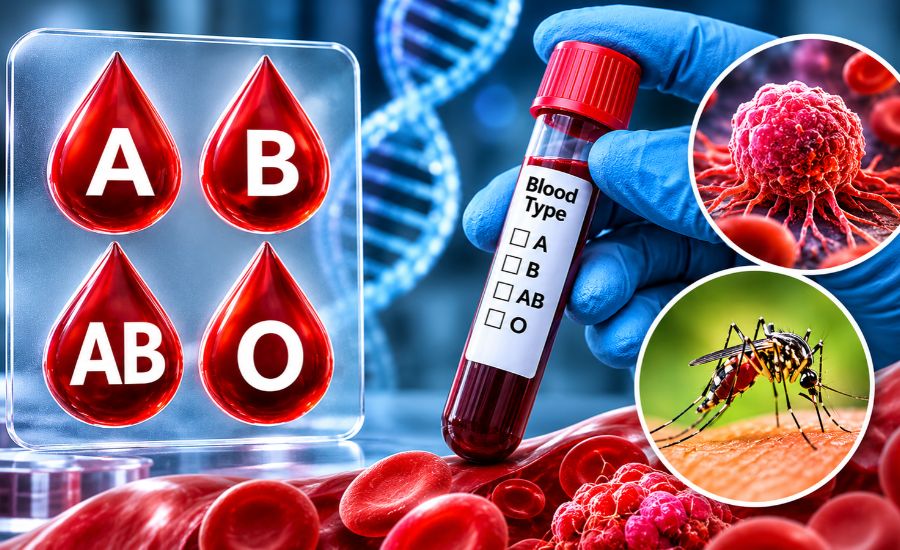

Most people know their blood type because of a medical examination, blood donation, pregnancy, or surgery. But could those few letters reveal something surprising about their long-term health?
Scientists have discovered that blood type may be associated with susceptibility to certain diseases, including cardiovascular disease, some types of cancer, and infectious illnesses.
Research even suggests that your blood type might influence how attractive you are to certain species of mosquitoes.
However, each blood group has its own potential advantages and disadvantages. Having a particular blood type does not guarantee protection against disease, nor does it mean you are destined to develop a particular health condition.
So, is there really a healthiest blood type? Let’s explore what science has discovered.
Understanding the Four Main Blood Types
Your blood type is inherited from your parents and determined by specific molecules called antigens on the surface of your red blood cells.
The ABO blood group system consists of four main types:
- Type A: Contains A antigens.
- Type B: Contains B antigens.
- Type AB: Contains both A and B antigens.
- Type O: Contains neither A nor B antigens.
Each blood group can also be Rh-positive or Rh-negative, creating eight major blood types.
Although these differences are particularly important during blood transfusions, they may also influence blood clotting, immune responses, and interactions with certain microorganisms.
Blood Type A: A Potentially Higher Risk of Certain Cancers
People with blood type A may have an increased susceptibility to certain types of cancer, particularly stomach and pancreatic cancer.
A comprehensive scientific review published in BMC Medicine in 2024 found that, compared with people with type O blood, individuals with type A had approximately:
- 19% higher odds of stomach cancer.
- 33% higher odds of pancreatic cancer.
Researchers have also identified associations between blood type A and an increased risk of blood clots.
One possible explanation involves higher circulating levels of certain proteins involved in blood coagulation.
However, blood type is only one contributing factor. Smoking, family history, age, obesity, and other medical conditions can play a much greater role in determining individual cancer risk.
Blood Type B: Potential Advantages Against Certain Infections
People with blood type B may have some protection against particular strains of norovirus, a highly contagious virus responsible for vomiting, diarrhea, and stomach cramps.
This may be related to differences in the molecules that certain viruses use to attach to cells in the digestive tract.
However, blood type B does not provide immunity against norovirus, and susceptibility varies depending on the viral strain and other inherited characteristics.
Research has also linked blood type B with elevated odds of pancreatic cancer and a greater likelihood of blood clot formation compared with type O.
These findings represent statistical associations rather than predictions of an individual’s future health.
Blood Type AB: Rare but Medically Valuable
Blood type AB is relatively uncommon, but it has some remarkable characteristics.
People with AB-positive blood are known as universal red blood cell recipients because they can generally receive red blood cells from all eight major blood groups, subject to appropriate compatibility testing.
Type AB plasma is also particularly valuable for blood donation.
However, like other non-O blood groups, type AB has been associated with an elevated risk of certain blood clotting disorders.
Some studies have also suggested associations with cardiovascular disease and specific cancers, although the strength of evidence varies.
Having blood type AB does not mean that a person will necessarily experience these health problems.
Blood Type O: Lower Clotting Risk but Greater Susceptibility to Bleeding?
Blood type O is often considered favorable because research has associated it with a lower risk of certain cardiovascular conditions and cancers.
People with blood type O generally have lower levels of von Willebrand factor, a protein that helps platelets adhere to damaged blood vessels and plays an important role in blood clotting.
This characteristic may help explain their lower susceptibility to certain types of thrombosis.
However, there is another side to this advantage.
The same 2024 scientific review found that people with type O blood had approximately 33% higher odds of bleeding complications compared with individuals with other ABO blood types.
Type O blood has also been associated with increased susceptibility to certain strains of norovirus.
From a blood donation perspective, O-negative blood is especially valuable because its red blood cells can be used in emergencies when a patient’s blood type is unknown.
Which Blood Type Attracts the Most Mosquitoes?
Have you ever noticed that mosquitoes seem to prefer certain people while leaving others relatively untouched?
Your blood type might be one of several contributing factors.
A Japanese study published in the Journal of Medical Entomology in 2004 investigated mosquito landing preferences among people with different blood groups.
Researchers found that Asian tiger mosquitoes landed more frequently on individuals with blood type O than those with blood type A.
However, the differences between type O and the other blood groups were not statistically significant.
Other studies involving different mosquito species have reported different preferences, including a preference for blood type B.
Mosquito attraction also depends on numerous other factors, including body temperature, carbon dioxide emissions, skin odor, skin bacteria, and individual body chemistry.
Therefore, blood type alone cannot reliably predict how frequently someone will experience mosquito bites.
Can Your Blood Type Influence Your Risk of Heart Disease?
One of the more consistently documented associations between blood type and health involves blood clot formation.
Individuals with non-O blood types generally have higher levels of von Willebrand factor and factor VIII, both of which participate in the coagulation process.
Researchers believe these differences may partly explain why non-O blood types have been associated with a greater likelihood of venous thromboembolism, including deep vein thrombosis and pulmonary embolism.
Nevertheless, people with blood type O can still develop serious cardiovascular conditions.
High blood pressure, smoking, elevated cholesterol, diabetes, physical inactivity, and family history remain important cardiovascular risk factors regardless of blood group.
Knowing your blood type should never replace regular cardiovascular examinations or appropriate preventive care.
Blood Type and Norovirus: Why Some People May Be More Susceptible
Norovirus is one of the most common causes of acute gastroenteritis worldwide.
Interestingly, researchers have discovered that genetic characteristics associated with blood group antigens can influence how certain norovirus strains interact with the digestive system.
A 2020 systematic review and meta-analysis found that individuals with type O blood had approximately 28% higher odds of norovirus infection.
However, another inherited characteristic, known as secretor status, also plays an important role.
Secretor status influences whether certain blood group-related molecules are present in saliva and on mucosal surfaces, including those lining the digestive tract.
This helps explain why two people with the same blood type may respond differently when exposed to the same virus.
Regardless of blood type, washing your hands thoroughly with soap and water remains one of the most important ways to reduce norovirus transmission.
Blood Type and Health: A Quick Comparison
| Blood type | Potential advantages | Potential disadvantages |
|---|---|---|
| A | May be less attractive to certain mosquito species than type O | Higher odds of stomach and pancreatic cancer and certain blood clots |
| B | Possible reduced susceptibility to some norovirus strains | Higher pancreatic cancer and clotting risk compared with type O |
| AB | AB-positive individuals can receive red cells from all major blood groups | Increased susceptibility to certain clotting disorders |
| O | Lower risk of certain blood clots and some cancers | Higher bleeding risk and susceptibility to some norovirus strains |
These are population-level associations. They should not be interpreted as individual medical predictions.
Should You Eat According to Your Blood Type?
The blood type diet has become a popular wellness concept, suggesting that people should consume specific foods according to their ABO blood group.
Its supporters claim that matching dietary choices to blood type can improve digestion, energy levels, weight management, and overall health.
However, convincing scientific evidence supporting these claims is lacking.
A nutritious diet rich in vegetables, fruits, legumes, whole grains, healthy fats, and appropriate protein sources can support health regardless of blood type.
Individual dietary needs are better determined by medical conditions, nutritional requirements, food intolerances, lifestyle, and personal health goals.
Is There Really a Healthiest Blood Type?
Although type O appears to have certain advantages regarding blood clotting and specific cancers, it also comes with potential disadvantages.
Similarly, blood types A, B, and AB each have distinct biological characteristics that may influence susceptibility to different health conditions.
There is no scientifically established best or worst blood type.
More importantly, many of the reported associations come from observational research. Differences in genetics, ancestry, geographical location, and environmental exposures may influence the findings.
Your blood type is something you inherit, but many important aspects of your health can still be influenced by your daily choices.
Maintaining a healthy weight, staying physically active, eating a balanced diet, avoiding tobacco, getting sufficient sleep, and undergoing recommended medical screenings remain essential.
Final Thoughts
Your blood type may reveal more about your biology than you previously realized.
From blood clot formation and infection susceptibility to certain cancer risks and mosquito preferences, the differences between A, B, AB, and O continue to fascinate scientists.
However, your blood group is only one small part of a much larger health picture.
Rather than worrying about the blood type you inherited, focus on the habits and preventive measures that you can control.
Your blood type may influence certain health risks, but it does not determine your destiny




Leave a Reply
You must be logged in to post a comment.