
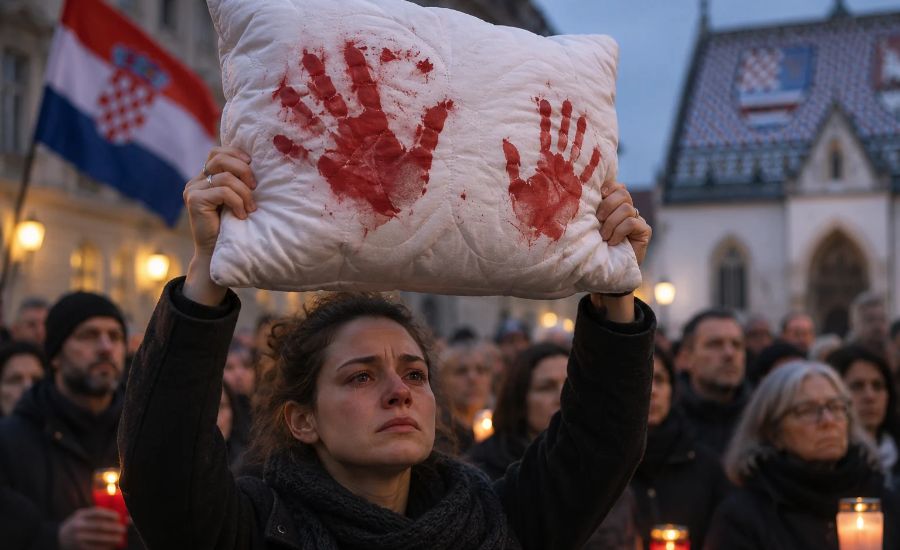

A devastating tragedy inside a psychiatric hospital in Zagreb, Croatia, has sparked nationwide outrage, leaving a grieving family searching for answers and thousands of citizens demanding justice.
Kristian Josip Periš, a 32-year-old former athlete, kinesiologist and parasport coach, died on October 21, 2026, while receiving treatment at the Sveti Ivan Psychiatric Clinic in Zagreb’s Jankomir district.
What should have been a place of professional care, safety and recovery became the center of a disturbing criminal investigation following allegations of physical abuse by hospital employees.
The case has shaken Croatia and raised uncomfortable questions about patient safety, institutional accountability and the treatment of some of society’s most vulnerable individuals.
A Young Man Who Needed Help
Kristian Josip Periš was more than a psychiatric patient. He was a young man with a professional career, personal ambitions and a background in sports and physical education.
He had worked as a kinesiologist and parasport coach, helping people with disabilities participate in sporting activities.
When he entered the psychiatric facility, he was supposed to receive professional medical assistance in a safe and supportive environment.
Instead, he lost his life under circumstances that have since shocked the Croatian public.
His death might never have received such widespread attention had disturbing surveillance footage from inside the hospital not emerged.
Disturbing Surveillance Footage Reveals Alleged Violence
The case attracted national attention after Croatian media published surveillance footage reportedly showing hospital employees using physical force against Kristian while he was restrained on a hospital bed.
According to media reports, the recordings showed staff members striking him and holding a pillow over his face.
The footage sparked immediate public outrage, with many questioning how such actions could take place inside a medical institution responsible for protecting vulnerable patients.
The recordings also raised serious concerns about the use of physical restraints, the conduct of hospital employees and the apparent failure to intervene.
The precise medical cause of Kristian’s death and the individual responsibilities of those involved remain matters for forensic examination and criminal proceedings.
Eight People Arrested as Investigation Expands
Following the emergence of the footage, Croatian authorities launched a criminal investigation.
Four medical technicians were initially arrested on suspicion of aggravated murder involving a particularly vulnerable person.
The investigation subsequently expanded to include four additional individuals, reportedly including a doctor, nurses and another medical technician.
Investigators are examining not only the alleged violence but also whether other employees failed to intervene, provide appropriate medical assistance or report what had happened.
The scandal also resulted in the resignation of hospital director Majda Grah and other members of the institution’s leadership.
The accused individuals are presumed innocent unless proven guilty in court.
Why Did It Take So Long for Authorities to Be Informed?
One of the most troubling aspects of the case is the reported delay in notifying the relevant authorities.
Croatia’s Ministry of Health reportedly received formal notification more than two weeks after Kristian’s death.
Health Minister Irena Hrstić stated that the hospital should have reported the incident immediately.
The delay has intensified public concerns about transparency, internal reporting procedures and institutional oversight.
Many people are now questioning whether existing safeguards are sufficient to protect psychiatric patients and ensure that serious incidents are investigated promptly and independently.
Thousands of Protesters Carry White Pillows With Red Handprints
On November 21, exactly one month after Kristian’s death, thousands of people gathered in Zagreb to demand justice.
Among the most powerful images from the demonstration were white pillows marked with red handprints.
The pillows became a symbol of the alleged violence Kristian experienced inside the psychiatric hospital.
Demonstrators also lit candles and paid tribute to the young man, demanding accountability and meaningful changes to the psychiatric healthcare system.
The protest was about more than one individual case. It reflected growing concerns about the safety, dignity and rights of people receiving psychiatric treatment.
For many participants, Kristian’s death represented a broader institutional failure that should never be allowed to happen again.
A Psychiatric Diagnosis Should Never Take Away a Person’s Human Rights
People experiencing mental health difficulties are among the most vulnerable patients in healthcare settings.
They may struggle to communicate their needs, defend themselves or report mistreatment. In some circumstances, they may also be placed under involuntary treatment, limiting their freedom and independence.
However, a psychiatric diagnosis does not eliminate a person’s fundamental human rights.
Every patient deserves respectful treatment, appropriate medical care, protection from violence and access to safe complaint mechanisms.
Healthcare professionals have a duty to protect patients, particularly those who cannot protect themselves.
Physical force must never be used as punishment or as a substitute for appropriate psychiatric care.
The Serious Dangers of Physical Restraint
Physical restraint is sometimes employed in psychiatric settings when a patient presents an immediate danger to themselves or others.
However, it is considered a high-risk intervention that should only be used when less restrictive alternatives are insufficient.
Improper or excessive restraint can result in serious complications, including:
- Restricted breathing and oxygen deprivation
- Cardiovascular complications
- Physical injuries
- Loss of consciousness
- Severe psychological trauma
- Potentially fatal complications
International mental health advocates have increasingly called for reducing coercive practices and prioritizing compassionate, patient-centered approaches.
These include verbal de-escalation, psychological support, crisis intervention and individualized treatment.
Patients experiencing a mental health crisis need understanding and professional assistance, not unnecessary force or intimidation.
European Mental Health Organizations Call for Change
Kristian’s death has attracted attention beyond Croatia’s borders.
Mental Health Europe has expressed concern over the tragedy and called for accountability and stronger protections against harmful coercive practices within psychiatric institutions.
The incident has renewed discussions about the need for independent inspections, transparent investigations, better employee training and accessible community-based mental health services.
While many healthcare professionals provide compassionate and dedicated psychiatric care, allegations of institutional abuse must be investigated thoroughly.
Accountability is essential not only for individual patients and their families but also for maintaining public trust in mental healthcare.
Could This Tragedy Have Been Prevented?
As investigations continue, several important questions remain unanswered.
Were appropriate medical protocols followed? Could other employees have intervened? Were existing patient protection mechanisms adequate? Why was there a reported delay in notifying the authorities?
The answers could reveal whether Kristian’s death resulted from individual misconduct, broader institutional failures or a combination of both.
Understanding these circumstances will be essential to preventing similar tragedies in the future.
Psychiatric hospitals should be places where people feel safe enough to seek help without fearing humiliation, mistreatment or violence.
A Nation Demands Justice for Kristian
Kristian Josip Periš entered a psychiatric hospital to receive medical care. He never returned home.
His death has left a grieving family, a deeply disturbed public and a country confronting difficult questions about its mental healthcare system.
While criminal proceedings must establish the facts and individual responsibilities, the tragedy has already become a powerful reminder of the importance of protecting vulnerable patients.
No mental health condition should diminish a person’s dignity.
No psychiatric diagnosis should justify abuse.
And no family should have to fear that seeking professional help for a loved one could end in tragedy.
For thousands of people across Croatia, the demand is clear: justice for Kristian, accountability for any wrongdoing and meaningful changes to ensure that such a tragedy never happens again.
Editorial note: This article reflects information available as of November 24, 2026. The investigation remains ongoing, and the allegations have not yet been conclusively established through court proceedings.




Leave a Reply
You must be logged in to post a comment.