
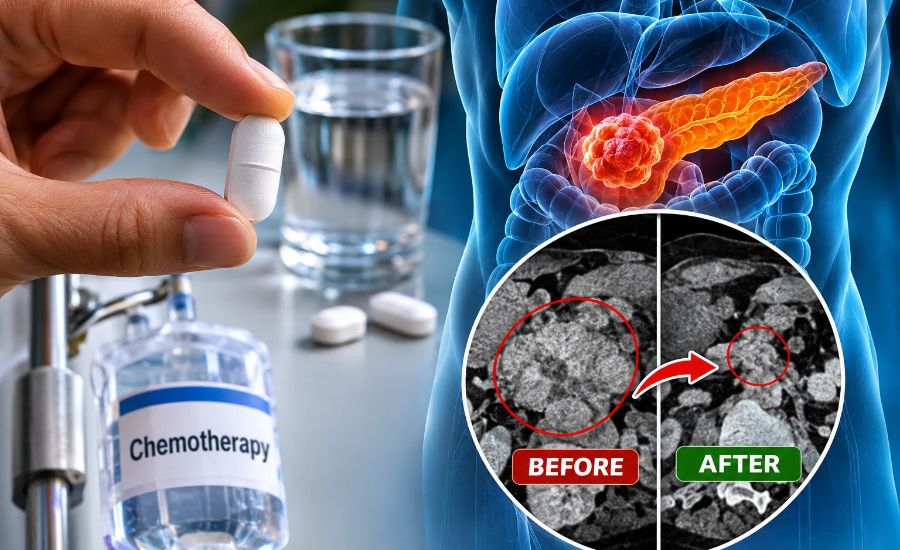

Pancreatic cancer is one of the most challenging cancers to treat, but an emerging treatment approach is offering new hope to patients and their families.
Researchers investigating a daily oral medication combined with chemotherapy have reported promising results, with approximately 61% of patients experiencing significant tumor shrinkage or a complete response.
The findings are particularly encouraging because pancreatic cancer is frequently diagnosed at an advanced stage, when surgery is no longer possible and treatment options become more limited.
Although the treatment is not considered a cure, the results represent a potentially significant advancement in pancreatic cancer research.
A Promising New Approach to Pancreatic Cancer Treatment
The medication, known as daraxonrasib, is designed to interfere with molecular signals that enable cancer cells to grow and multiply.
Updated results from the Phase 1/2 RMC-GI-102 clinical trial were presented in November 2026 at an international cancer research symposium in Barcelona, Spain.
The study involved 61 patients with metastatic pancreatic ductal adenocarcinoma, the most common type of pancreatic cancer.
Participants received daraxonrasib alongside two established chemotherapy medications, gemcitabine and nab-paclitaxel.
Unlike conventional chemotherapy alone, this combination approaches cancer from multiple biological directions, targeting both rapidly dividing cells and specific molecular mechanisms responsible for tumor growth.
What Did the Clinical Trial Reveal?
After a median follow-up of 18.3 months, researchers reported several encouraging findings:
- 60.7% of patients experienced significant tumor shrinkage or a complete response.
- 90.2% of patients achieved disease control, meaning their tumors shrank or remained stable.
- 8.2% of patients experienced a complete response, with no detectable tumors on imaging scans.
- 76.6% of patients were alive one year after beginning treatment.
- Median progression-free survival reached 12.8 months.
These findings are particularly promising given the aggressive nature of metastatic pancreatic cancer.
However, a complete response on imaging does not necessarily mean that every cancer cell has been eliminated from the body.
How Does Daraxonrasib Work?
Daraxonrasib belongs to an emerging category of targeted cancer therapies designed to interfere with RAS proteins.
Mutations in the KRAS gene are found in approximately 90% of pancreatic ductal adenocarcinomas.
When mutated, these proteins can continuously send signals that encourage cancer cells to grow, survive, and multiply.
For decades, scientists struggled to develop medications capable of effectively blocking these proteins. KRAS was frequently considered an exceptionally difficult therapeutic target.
Daraxonrasib offers a different approach by inhibiting multiple forms of active RAS proteins and disrupting signaling pathways that cancer cells depend on.
Combining this targeted treatment with chemotherapy may help attack cancer through multiple mechanisms and potentially improve treatment outcomes.
Earlier Research Found That the Pill Nearly Doubled Median Survival
The latest findings build upon previous research published in the New England Journal of Medicine in 2026.
In a separate Phase 3 clinical trial involving patients with previously treated metastatic pancreatic cancer, researchers compared daraxonrasib with conventional chemotherapy.
Patients receiving daraxonrasib had a median overall survival of 13.2 months, compared with 6.7 months among patients receiving chemotherapy.
These results provided further evidence that targeting RAS proteins could improve survival outcomes in certain patients with advanced pancreatic cancer.
Why Is Pancreatic Cancer So Difficult to Treat?
Pancreatic cancer is sometimes described as a silent disease because it may not produce noticeable symptoms during its earliest stages.
By the time symptoms appear, the cancer may have already spread beyond the pancreas.
Several factors make pancreatic cancer particularly difficult to treat, including its aggressive biological behavior, resistance to certain treatments, and the dense tissue surrounding tumors that can interfere with drug delivery.
Surgery offers the possibility of long-term survival for some patients with localized disease. Unfortunately, many patients are diagnosed when surgical removal is no longer possible.
This is why developing more effective treatments for metastatic pancreatic cancer remains a major priority in oncology.
Early Warning Signs of Pancreatic Cancer
Although pancreatic cancer can develop without obvious symptoms, potential warning signs include:
- Unexplained weight loss
- Persistent abdominal or back pain
- Yellowing of the skin or eyes
- Dark urine and pale stools
- Loss of appetite
- Persistent digestive problems
- Newly developed or suddenly worsening diabetes
- Unexplained fatigue
- Nausea and abdominal discomfort
These symptoms can also result from many less serious medical conditions. However, persistent or unexplained symptoms should never be ignored.
Are There Any Side Effects?
Despite its promising results, daraxonrasib is not without potential risks.
Reported side effects include skin rashes, diarrhea, nausea, fatigue, mouth sores, vomiting, abdominal discomfort, and reduced appetite.
More serious complications are also possible, which is why treatment requires careful medical supervision.
Researchers must continue evaluating the long-term safety and tolerability of combining daraxonrasib with chemotherapy.
Has the Drug Been Approved?
In August 2026, the US Food and Drug Administration approved daraxonrasib, marketed under the name Rasonque, for certain adults with metastatic pancreatic adenocarcinoma.
However, this approval should not be confused with approval of the newly investigated first-line chemotherapy combination.
A larger randomized Phase 3 clinical trial, known as RASolute 303, is investigating whether daraxonrasib, administered alone or alongside chemotherapy, offers better outcomes than standard chemotherapy as an initial treatment.
Could This Be a Major Turning Point in Pancreatic Cancer Treatment?
For patients diagnosed with advanced pancreatic cancer, improvements in survival and disease control can make a meaningful difference.
The possibility of achieving substantial tumor shrinkage in approximately six out of ten patients represents an encouraging development.
However, researchers emphasize that the latest combination study involved only 61 participants and did not include a randomized control group.
Larger clinical trials are necessary to establish whether this treatment combination improves long-term survival compared with existing therapies.
Scientists must also determine how long treatment responses last and whether cancer cells eventually develop resistance.
Final Thoughts
The discovery that a daily targeted medication combined with chemotherapy can produce significant tumor responses in patients with metastatic pancreatic cancer represents a promising advancement in modern oncology.
Although it is too early to describe the combination as a cure, the findings demonstrate how advances in molecular medicine could transform the treatment of cancers that have historically been extremely difficult to manage.
For patients and families facing pancreatic cancer, this research offers something particularly valuable: a scientifically supported reason for hope.
Scientific research: Phase 1/2 RMC-GI-102 clinical trial, presented at the EORTC-NCI-AACR Symposium, November 2026.




Leave a Reply
You must be logged in to post a comment.