
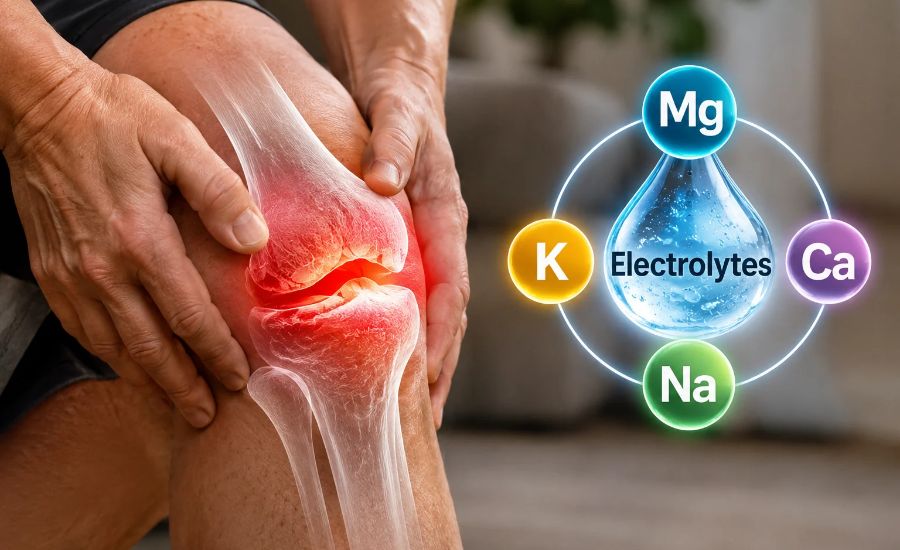

When people experience stiff knees, painful hips, or reduced joint mobility, aging, genetics, and mechanical wear are often considered the primary culprits.
However, researchers are also exploring a frequently overlooked aspect of joint health: the role of electrolytes and mineral balance.
Magnesium, potassium, calcium, and sodium are essential for numerous biological processes, including muscle contraction, nerve signaling, inflammation regulation, and the maintenance of healthy tissues.
Interestingly, some of these processes are directly involved in the development and symptoms of osteoarthritis, also known as arthrosis.
Could inadequate mineral intake be contributing to joint pain, stiffness, and reduced mobility? And could maintaining a healthy electrolyte balance help improve joint function?
While electrolyte deficiencies have not been established as a direct cause of osteoarthritis, emerging research suggests that their relationship with joint health deserves greater attention.
What Is Osteoarthritis?
Osteoarthritis is a chronic joint disorder characterized by changes in the cartilage, underlying bone, synovial membrane, and surrounding tissues.
Healthy cartilage provides a smooth, flexible surface that allows bones to move against each other while absorbing mechanical pressure.
As osteoarthritis progresses, the cartilage can gradually deteriorate, reducing its ability to protect the joint.
Common symptoms include joint pain, stiffness, reduced flexibility, swelling, cracking sensations, and difficulty performing everyday activities.
Although osteoarthritis has traditionally been described as a wear-and-tear condition, scientists now recognize that metabolic changes, low-grade inflammation, genetics, and other biological factors also contribute to its development.
This is where the potential role of electrolytes becomes particularly interesting.
What Are Electrolytes and Why Do Your Joints Need Them?
Electrolytes are minerals that carry an electrical charge when dissolved in bodily fluids. They are essential for maintaining fluid balance, transmitting nerve impulses, regulating muscle contractions, and supporting normal cellular function.
The main electrolytes include magnesium, potassium, sodium, calcium, chloride, phosphate, and bicarbonate.
Although electrolytes are commonly associated with hydration, athletic performance, and cardiovascular health, they also participate in biological processes that influence the musculoskeletal system.
An imbalance may affect muscle strength, pain perception, and the ability of muscles to support and stabilize joints.
1. Magnesium Deficiency: An Overlooked Factor in Joint Pain?
Magnesium is perhaps the most extensively investigated electrolyte in relation to osteoarthritis symptoms.
This essential mineral participates in hundreds of biochemical reactions, including those involved in energy production, muscle function, bone metabolism, and nervous system regulation.
Magnesium also influences NMDA receptors, which are involved in pain signaling. Inadequate magnesium availability may contribute to increased sensitivity to pain.
What Does the Science Say?
A study published in Osteoarthritis and Cartilage in 2018 examined 2,548 individuals with radiographically confirmed knee osteoarthritis.
Researchers discovered that lower magnesium intake was associated with greater knee pain and poorer physical function.
Interestingly, the relationship was also influenced by dietary fiber intake, suggesting that overall nutritional habits may play an important role.
Another study published in 2019, involving 4,953 Finnish participants, did not establish a significant relationship between dietary magnesium intake and the development of knee osteoarthritis requiring hospitalization.
Together, these findings suggest that magnesium may be more closely associated with symptom severity than with the actual development of osteoarthritis.
However, clinical trials are still needed to determine whether magnesium supplementation can reliably reduce osteoarthritis symptoms.
2. Potassium May Influence Joint Stiffness and Mobility
Potassium is essential for normal muscle contraction, nerve transmission, and cellular fluid balance.
When potassium levels become abnormally low, individuals may experience muscle weakness, fatigue, cramps, and reduced physical performance.
Weak muscles surrounding an affected joint can make everyday movements more difficult and reduce joint stability.
A study published in Nutrients in 2022 investigated the relationship between dietary minerals and symptomatic knee osteoarthritis.
Researchers found that higher magnesium and potassium intake was associated with:
- Reduced joint stiffness.
- Better physical function.
- Lower overall osteoarthritis symptom scores.
However, researchers did not identify significant associations with structural improvements in the knee or with knee pain considered separately.
This distinction is important because improving joint function does not necessarily mean that damaged cartilage is being repaired.
3. The Hidden Connection Between Magnesium, Calcium, and Joint Crystals
One of the most fascinating connections between mineral metabolism and joint disease involves calcium pyrophosphate deposition disease, commonly known as CPPD.
This condition develops when calcium pyrophosphate crystals accumulate within cartilage and other joint tissues.
These crystals can trigger inflammatory reactions, resulting in severe joint pain, swelling, stiffness, and reduced mobility.
An acute episode is sometimes called pseudogout.
Interestingly, abnormally low magnesium levels are a recognized risk factor for CPPD.
Magnesium participates in enzymatic processes involved in pyrophosphate metabolism and may influence the formation and solubility of calcium pyrophosphate crystals.
People with CPPD can also have osteoarthritis, making the two conditions difficult to distinguish without appropriate medical evaluation.
However, this does not mean that calcium-rich foods cause arthritis or that taking magnesium supplements will dissolve existing joint crystals.
4. Your Cartilage Depends on Water and Charged Minerals
One of the most overlooked aspects of joint health is the unique relationship between cartilage, water, and electrically charged particles.
Healthy articular cartilage contains approximately 65–80% water.
Within the cartilage are specialized molecules called proteoglycans, which contain negatively charged glycosaminoglycans.
These negatively charged structures attract positively charged ions, particularly sodium, creating osmotic forces that help retain water within the cartilage.
This biological mechanism allows cartilage to withstand compression and absorb mechanical pressure during walking, running, and other movements.
In osteoarthritis, changes occur within the collagen network and proteoglycan structure, altering how cartilage retains and distributes water.
Unfortunately, drinking more water or consuming additional electrolytes cannot automatically reverse these structural changes.
In fact, damaged cartilage may contain increased amounts of water while simultaneously losing its mechanical strength.
Cartilage health depends on the organization of its molecular structure, not simply its water content.
5. Could Mineral Deficiencies Amplify Joint Pain?
Joint pain does not originate exclusively from damaged cartilage.
Muscles, ligaments, tendons, underlying bone, inflammation, and the nervous system can all contribute to the overall pain experience.
Electrolyte disturbances may create additional symptoms, including muscle cramps, weakness, fatigue, and abnormal nerve sensations.
For someone already living with osteoarthritis, these problems may further complicate movement and physical activity.
Correcting an identified mineral deficiency may improve normal muscle and nerve function, although its direct effect on osteoarthritis pain remains uncertain.
This raises an important question: should nutritional status receive greater attention when managing chronic musculoskeletal pain?
6. What Causes Electrolyte Imbalances?
Electrolyte disturbances can develop for several reasons, and they are not always caused by inadequate dietary intake.
Potential contributing factors include:
- Chronic diarrhea and digestive disorders.
- Nutrient malabsorption.
- Excessive sweating.
- Prolonged vomiting.
- Certain diuretic medications.
- Long-term use of some acid-reducing medications.
- Kidney disease.
- Inadequate or highly restrictive diets.
- Excessive alcohol consumption.
- Certain hormonal and metabolic disorders.
Persistent electrolyte disturbances should be medically investigated rather than treated through indiscriminate supplementation.
Best Natural Sources of Electrolytes for Joint and Muscle Health
A varied, nutrient-rich diet is generally the best starting point for maintaining adequate mineral intake.
| Electrolyte | Natural Food Sources |
|---|---|
| Magnesium | Pumpkin seeds, almonds, spinach, cacao, lentils |
| Potassium | Avocados, potatoes, bananas, beans, leafy greens |
| Calcium | Yogurt, sesame seeds, sardines, calcium-set tofu |
| Sodium | Table salt, olives, cheese, naturally occurring sodium in foods |
| Phosphorus | Eggs, legumes, nuts, fish, dairy products |
| Chloride | Table salt, olives, tomatoes, celery |
These foods also provide various antioxidants, vitamins, proteins, and other nutrients that contribute to overall musculoskeletal health.
Homemade Mineral-Rich Green Smoothie
This smoothie provides naturally occurring potassium, magnesium, healthy fats, and dietary fiber.
Ingredients:
- 1 small banana
- ½ avocado
- 1 handful of spinach
- 1 tablespoon of pumpkin seeds
- 200 ml of water
- Juice of half a lemon
Preparation:
Place all ingredients in a blender and blend until smooth. Enjoy immediately as part of a balanced diet.
This beverage supports normal nutritional intake but should not be considered a treatment for osteoarthritis.
People with kidney disease or elevated potassium levels should seek medical advice before regularly consuming potassium-rich drinks.
Should People With Osteoarthritis Have Their Electrolytes Checked?
Routine electrolyte testing is not necessary for everyone diagnosed with osteoarthritis.
However, testing may be appropriate when joint symptoms occur alongside unexplained muscle weakness, frequent cramps, persistent fatigue, digestive disorders, or suspected calcium crystal deposition.
Depending on individual symptoms and medical history, a healthcare professional may recommend assessing magnesium, calcium, potassium, sodium, phosphorus, vitamin D, kidney function, and parathyroid hormone levels.
These investigations may help identify underlying nutritional or metabolic problems that require treatment.
A suddenly swollen, hot, or extremely painful joint, particularly when accompanied by fever, requires urgent medical evaluation.
Can Electrolytes Reverse Osteoarthritis?
Despite the interesting scientific findings surrounding mineral metabolism and joint health, there is currently no convincing clinical evidence that electrolyte supplementation can regenerate damaged cartilage or reverse osteoarthritis.
Maintaining adequate mineral levels is nevertheless important for normal muscle function, bone health, cellular metabolism, and nervous system activity.
The most evidence-based approaches to managing osteoarthritis include regular therapeutic exercise, muscle strengthening, weight management when appropriate, physical therapy, and individualized pain management.
Correcting nutritional deficiencies can complement these approaches but should not replace them.
Final Thoughts
Osteoarthritis is far more complex than simple wear and tear.
The relationship between magnesium, potassium, calcium metabolism, pain signaling, and cartilage physiology demonstrates how nutritional and metabolic factors may influence the overall experience of joint disease.
Although electrolyte deficiencies are not an established cause of osteoarthritis, overlooking an existing mineral deficiency could mean overlooking an additional contributor to muscle weakness or physical discomfort.
The emerging research encourages a broader approach to joint health — one that considers not only the condition of the cartilage but also the nutritional, muscular, neurological, and metabolic systems that support movement.
Scientific References:
Low Magnesium Intake Is Associated With Increased Knee Pain in Subjects With Radiographic Knee Osteoarthritis. Osteoarthritis and Cartilage, 2018.
Associations of Dietary Macroelements With Knee Joint Structures, Symptoms, Quality of Life, and Comorbid Conditions in People With Symptomatic Knee Osteoarthritis. Nutrients, 2022.
Dietary Magnesium Intake, Serum High Sensitivity C-Reactive Protein and the Risk of Incident Knee Osteoarthritis Leading to Hospitalization. A Cohort Study of 4,953 Finns, 2019.
Diagnosis and Treatment of Calcium Pyrophosphate Deposition Disease: A Review. Open Access Rheumatology, 2023.
NICE — Osteoarthritis in Over 16s: Diagnosis and Management, 2022.



Leave a Reply
You must be logged in to post a comment.