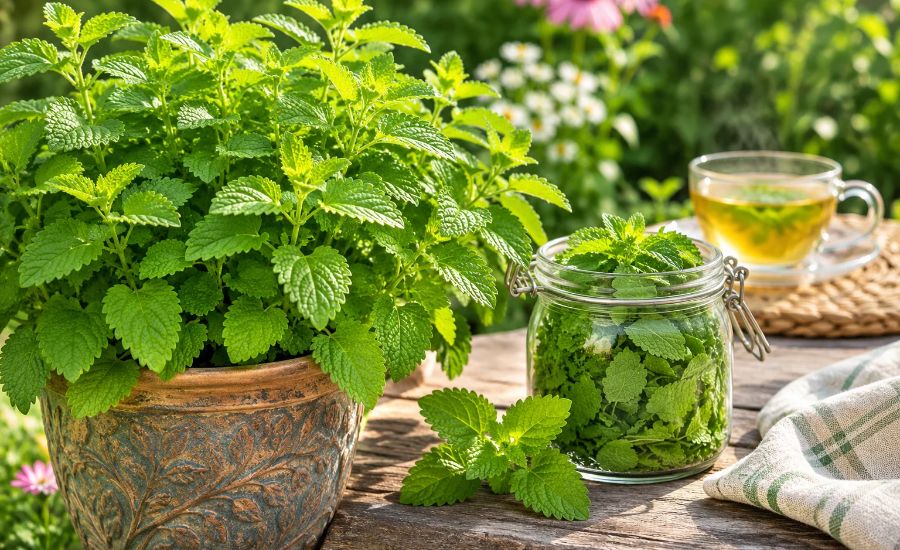

Lemon balm (Melissa officinalis) is a fragrant medicinal herb that has been valued for centuries for its calming properties, refreshing aroma, and traditional therapeutic uses.
Belonging to the mint family, this lemon-scented plant contains naturally occurring compounds that may influence the nervous system, cognitive function, and digestive tract.
Traditionally used to relieve restlessness, promote sleep, and ease digestive discomfort, lemon balm has also attracted scientific interest for its antioxidant and potential antiviral properties.
One of the best things about this versatile medicinal herb is that you can easily grow it in your garden, on your balcony, or even on a sunny windowsill.
What Makes Lemon Balm So Beneficial?
Lemon balm contains several biologically active plant compounds, including:
- Rosmarinic acid
- Caffeic acid
- Citral
- Geraniol
- Citronellal
- Flavonoids
- Tannins
- Ursolic acid
These compounds contribute to the herb’s antioxidant activity, distinctive fragrance, and potential therapeutic properties.
Rosmarinic acid, in particular, has attracted scientific interest because of its potential effects on neurotransmitter activity, inflammation, and oxidative stress.
However, the concentration of these compounds varies depending on growing conditions, harvesting methods, and preparation.
1. Lemon Balm May Help Calm the Nervous System
One of the best-known traditional uses of lemon balm is its ability to promote relaxation.
Researchers have investigated whether compounds found in lemon balm can influence gamma-aminobutyric acid (GABA), a neurotransmitter involved in regulating nervous system activity.
Laboratory studies suggest that certain lemon balm extracts may inhibit enzymes responsible for breaking down GABA, potentially contributing to their calming effects.
A randomized, placebo-controlled study published in Psychosomatic Medicine in 2004 found that lemon balm supplementation increased feelings of calmness in healthy adults exposed to experimentally induced stress.
Furthermore, a systematic review and meta-analysis published in Phytotherapy Research in 2021 found encouraging evidence that lemon balm may help reduce symptoms of anxiety and depression.
However, the researchers emphasized the need for larger, higher-quality clinical trials.
Lemon balm may be particularly useful as part of a relaxation routine for people experiencing occasional stress, nervous tension, and restlessness.
2. It May Promote Better Sleep
Lemon balm has traditionally been used as a gentle herbal sleep aid.
Unlike conventional sleeping medications, lemon balm is generally used to encourage relaxation rather than induce powerful sedation.
It is frequently combined with other calming herbs, such as valerian root, passionflower, lavender, and chamomile.
The European Medicines Agency recognizes the traditional use of lemon balm leaf for relieving mild mental stress and supporting sleep.
Drinking a warm cup of lemon balm tea before bedtime may be a pleasant addition to an evening relaxation routine.
However, evidence supporting its effectiveness as a standalone treatment for chronic insomnia remains limited.
3. Lemon Balm May Support Memory and Cognitive Function
Scientists have also explored the relationship between lemon balm and brain health.
Some of its naturally occurring compounds may influence cholinergic signaling, which plays an important role in attention, learning, and memory.
Small human studies published in Pharmacology Biochemistry and Behavior and Neuropsychopharmacology have investigated the effects of lemon balm on mood and cognitive performance.
Some participants experienced improvements in specific cognitive tasks, although the results varied according to the preparation and dosage used.
Lemon balm has also been investigated in people with Alzheimer’s disease, but existing evidence is insufficient to establish it as an effective treatment for dementia or other neurological conditions.
4. It May Ease Bloating and Digestive Discomfort
The digestive benefits of lemon balm have been recognized in traditional herbal medicine for centuries.
Its leaves have traditionally been used to help relieve mild digestive complaints, including:
- Bloating
- Excessive gas
- Mild abdominal discomfort
- Digestive tension associated with stress
- Occasional stomach cramps
The relationship between the brain and digestive system, commonly referred to as the gut-brain axis, may help explain why calming herbs are sometimes useful for stress-related digestive discomfort.
Lemon balm also contains compounds that have demonstrated antispasmodic activity in experimental research.
Although its traditional digestive uses are recognized by the European Medicines Agency, stronger human clinical evidence is needed to confirm its effectiveness.
5. Lemon Balm Has Potential Antiviral Properties
One of the most interesting areas of lemon balm research involves its potential activity against certain viruses, particularly the herpes simplex virus (HSV).
Laboratory studies suggest that lemon balm extracts may interfere with the ability of herpes simplex viruses to infect cells.
A randomized, double-blind, placebo-controlled clinical trial published in Phytomedicine in 1999 investigated a topical cream containing 1% standardized lemon balm extract in people with recurrent cold sores.
Researchers observed improvements in certain symptoms compared with placebo.
A systematic review published in 2025 also identified potential benefits of topical lemon balm preparations in reducing cold sore pain and swelling.
However, these findings apply primarily to specific topical formulations. Drinking lemon balm tea has not been proven to eliminate viral infections, and lemon balm cannot cure herpes.
6. It Contains Powerful Antioxidants
Lemon balm is naturally rich in polyphenols, particularly rosmarinic acid and various flavonoids.
These compounds demonstrate antioxidant activity in laboratory research, helping neutralize reactive molecules associated with oxidative stress.
Scientists are also investigating their potential anti-inflammatory properties.
Although these findings are promising, consuming lemon balm has not been proven to prevent chronic diseases associated with oxidative stress.
Why You Should Grow Lemon Balm at Home
Lemon balm is one of the easiest perennial medicinal herbs to cultivate.
It requires relatively little maintenance, produces abundant aromatic leaves, and attracts bees and other beneficial pollinators.
It can be grown outdoors in garden beds or indoors in containers with sufficient natural light.
For successful cultivation:
- Choose a sunny or partially shaded location.
- Use fertile, well-drained soil.
- Water regularly without oversaturating the roots.
- Trim the plant occasionally to encourage fresh growth.
- Harvest the leaves before flowering for a stronger aroma.
- Grow it in a container to prevent excessive spreading.
With proper care, lemon balm can provide fresh leaves throughout the growing season.
How to Harvest and Preserve Lemon Balm
Fresh lemon balm leaves are especially aromatic when harvested in the morning after the dew has evaporated.
Cut healthy stems using clean scissors and remove any damaged leaves.
To preserve lemon balm for later use, spread the leaves in a single layer in a dry, shaded, well-ventilated area.
Once completely dry, store them in an airtight glass jar away from direct sunlight, moisture, and heat.
Properly dried leaves can be used throughout the winter to prepare herbal teas and other beverages.
4 Simple Ways to Use Lemon Balm
1. Calming Lemon Balm Tea
Ingredients:
- 1–2 teaspoons of dried lemon balm leaves or a small handful of fresh leaves
- 1 cup of hot water
- Raw honey, optional
Preparation:
Pour hot water over the leaves, cover, and allow them to steep for 5–10 minutes. Strain and enjoy.
This aromatic tea can be incorporated into an evening relaxation routine.
2. Lemon Balm and Chamomile Evening Tea
Ingredients:
- 1 teaspoon of dried lemon balm
- 1 teaspoon of dried chamomile
- 1 cup of hot water
Preparation:
Combine the herbs, add hot water, and steep for approximately 10 minutes before straining.
This gentle herbal combination may help promote relaxation before bedtime.
3. Refreshing Lemon Balm and Cucumber Water
Ingredients:
- A handful of fresh lemon balm leaves
- Half a cucumber, sliced
- Half a lemon, sliced
- 1 liter of water
Preparation:
Combine all the ingredients in a glass pitcher and refrigerate for one to two hours.
Enjoy as a refreshing alternative to sugary beverages.
4. Lemon Balm and Ginger Digestive Tea
Ingredients:
- 1 teaspoon of dried lemon balm
- 2 thin slices of fresh ginger
- 1 cup of hot water
Preparation:
Pour hot water over the ingredients, cover, and steep for 10 minutes.
This warming herbal infusion can be enjoyed after meals, particularly when experiencing occasional digestive discomfort.
Who Should Be Careful When Using Lemon Balm?
Although lemon balm is generally well tolerated, it may cause unwanted effects in some individuals, including drowsiness, nausea, dizziness, and abdominal discomfort.
People taking sedatives or sleeping medications should exercise caution because lemon balm may increase drowsiness.
Individuals with thyroid disorders or those taking thyroid medications should consult a healthcare professional before using concentrated lemon balm supplements. Concerns about thyroid activity are primarily based on experimental research rather than established human clinical evidence.
Pregnant and breastfeeding women should avoid medicinal quantities without professional guidance because safety information is limited.
Lemon balm essential oil should not be swallowed or applied undiluted to the skin.
Final Thoughts
Lemon balm is far more than a pleasantly scented garden herb. Its traditional uses and growing body of scientific research make it an interesting botanical for supporting relaxation, sleep, and digestive comfort.
Research into its potential cognitive and antiviral properties is also encouraging, although further clinical studies are necessary to establish its effectiveness.
Whether enjoyed as a warm herbal tea, added to refreshing summer drinks, or cultivated in a small garden, lemon balm offers a simple way to incorporate traditional herbal practices into everyday life.
Scientific References:
Kennedy et al. Attenuation of Laboratory-Induced Stress in Humans After Acute Administration of Melissa officinalis. Psychosomatic Medicine, 2004.
The Effects of Lemon Balm on Depression and Anxiety in Clinical Trials: A Systematic Review and Meta-Analysis. Phytotherapy Research, 2021.
Kennedy et al. Modulation of Mood and Cognitive Performance Following Acute Administration of Melissa officinalis. Neuropsychopharmacology, 2003.
Koytchev et al. Balm Mint Extract for Topical Treatment of Recurring Herpes Labialis. Phytomedicine, 1999.
Herbal Medicine for Treating Herpes Labialis: A Systematic Review, 2025.
European Medicines Agency — Herbal Monograph on Melissa officinalis Leaf.
Royal Horticultural Society — Lemon Balm Growing Guide.




Leave a Reply
You must be logged in to post a comment.