
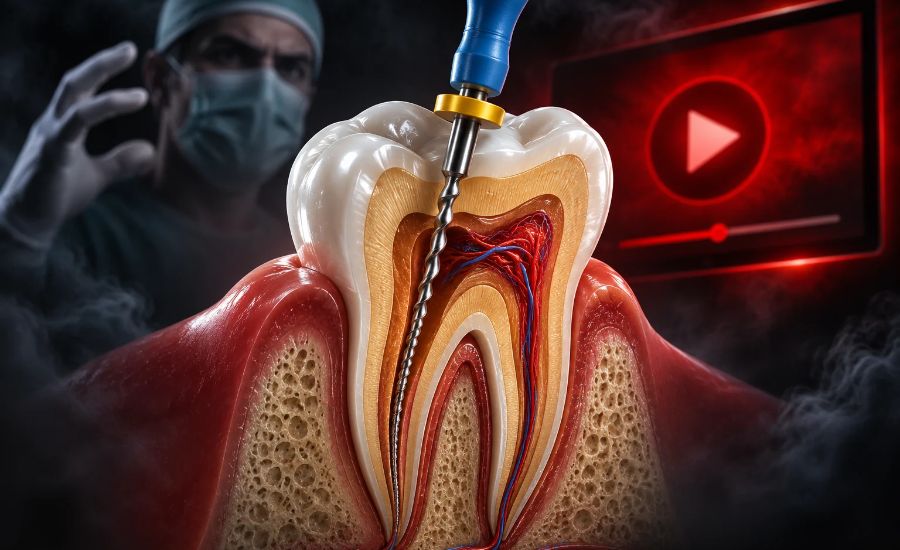

In 2019, Netflix quietly removed a controversial documentary that questioned one of the most common dental procedures in the world: root canal treatment.
The film, titled Root Cause, suggested that teeth treated with root canals could harbor harmful bacteria and contribute to chronic illnesses, including heart disease, autoimmune disorders, and cancer.
Its removal triggered a heated debate about medical misinformation, the influence of professional dental organizations, and whether streaming platforms should decide which health-related documentaries the public can watch.
Supporters of the documentary questioned why it disappeared so quickly. Dental professionals argued that its claims were scientifically unsupported and could frighten patients into refusing necessary treatment.
But what exactly did the film claim, why was it removed, and what does scientific research actually reveal?
The Documentary That Sparked an International Controversy
Root Cause, directed by Australian filmmaker Frazer Bailey, explored the possibility that chronic dental infections could contribute to serious health problems elsewhere in the body.
The documentary followed Bailey’s personal search for an explanation for persistent health symptoms, including fatigue and emotional difficulties.
During his investigation, he encountered alternative health practitioners who believed that root canal-treated teeth could become sources of hidden bacterial infections.
The film presented a controversial theory: although root canal treatment removes infected tissue from inside a tooth, bacteria might remain in microscopic structures within the surrounding dentin.
According to the documentary’s central argument, these bacteria could release toxins or contribute to inflammation that might affect organs far beyond the mouth.
Some individuals featured in the film went further, suggesting a connection between root canal-treated teeth and breast cancer.
These assertions attracted considerable attention, particularly among people interested in holistic dentistry, chronic inflammation, and the relationship between oral health and systemic disease.
However, the documentary did not establish that root canal treatment causes cancer or other chronic illnesses.
Why Did Netflix Remove Root Cause?
Netflix began streaming Root Cause in January 2019.
Within weeks, the documentary faced strong opposition from several major dental and scientific organizations.
The American Dental Association (ADA), American Association of Endodontists (AAE), and American Association for Dental Research (AADR) challenged the documentary’s medical claims.
On January 29, 2019, these organizations sent a joint letter to major streaming and distribution platforms, expressing concern that the documentary presented misleading information about root canal treatment.
They argued that the film relied on theories that had been scientifically discredited and could cause unnecessary fear among patients.
By late February 2019, Netflix had removed the documentary from its platform.
The removal was widely reported, and dental organizations openly acknowledged their efforts to challenge the film.
This confirms that professional organizations pressured streaming platforms over the documentary’s content.
However, claims that Netflix removed it because dentists threatened a lawsuit are not established by the available evidence. The documented campaign centered on scientific objections and concerns about patient safety.
The controversy raised a broader question: when a documentary makes disputed medical claims, should streaming platforms remove it or allow audiences to evaluate the arguments themselves?
The Cancer Claim That Alarmed Dental Experts
Perhaps the most controversial assertion in Root Cause involved breast cancer.
The documentary repeated a claim that approximately 97% of women with breast cancer had undergone root canal treatment or experienced a supposedly toxic dental condition.
The film also suggested that affected teeth frequently appeared on the same side of the body as the breast cancer.
These dramatic statistics attracted attention online.
However, the claims lacked reliable supporting evidence from appropriately designed clinical studies.
Even if a high proportion of people with a particular disease had previously undergone dental treatment, that observation would not establish causation.
Root canals are common procedures, and cancer is influenced by numerous factors, including age, genetics, environmental exposures, hormones, and lifestyle.
To establish whether root canal treatment increases cancer risk, researchers would need robust studies comparing appropriately matched populations while accounting for potential confounding factors.
Current scientific evidence does not demonstrate that receiving a root canal increases the risk of developing cancer.
Where Did the Theory About Root Canals and Chronic Disease Begin?
The idea that dental infections could cause diseases elsewhere in the body is not new.
During the early twentieth century, dentist Weston A. Price conducted experiments exploring what was then known as the focal infection theory.
The theory proposed that bacteria from infected teeth could migrate to other parts of the body and contribute to systemic illness.
Price’s work influenced decades of debate about dentistry and chronic disease.
However, his experimental methods had important limitations, and later scientific research did not substantiate his broad conclusions about root canal-treated teeth.
As dentistry advanced, researchers developed a more sophisticated understanding of oral bacteria, inflammation, immune responses, and infection.
Modern endodontic treatment is specifically designed to eliminate infected tissue, disinfect the root canal system, and seal the tooth against reinfection.
The historical focal infection theory should not be confused with contemporary research examining the relationship between oral health and systemic inflammation.
Can Bacteria Remain Inside a Root Canal-Treated Tooth?
One aspect of the discussion deserves attention: root canal treatment is not always successful.
A tooth contains a complex network of root canals and microscopic dentinal tubules.
Because of this anatomy, eliminating every microorganism can be challenging.
In some cases, bacteria may persist after treatment or enter the tooth again because of leakage, incomplete cleaning, or a damaged restoration.
These problems can contribute to persistent or recurrent infection around the root tip.
Patients may experience symptoms such as discomfort, swelling, tenderness when biting, or the development of a dental abscess.
Other infections may initially produce few noticeable symptoms and be discovered during dental examinations.
However, the possibility of persistent infection does not mean that every root canal-treated tooth is infected, nor does it establish that root canals cause cancer.
When treatment fails, dentists may recommend retreatment, endodontic surgery, or extraction if the tooth cannot be saved.
What Does Science Say About Dental Infections and Overall Health?
The relationship between oral health and general health is an important area of medical research.
Researchers have investigated associations between periodontal disease, chronic oral inflammation, and conditions such as cardiovascular disease and diabetes.
Poor oral health can contribute to inflammation, and certain oral bacteria can enter the bloodstream, particularly when gum tissues are inflamed.
Severe untreated dental infections can occasionally spread beyond the original tooth and become medically dangerous.
However, there is a critical distinction between an untreated infection and a successfully treated tooth.
Root canal therapy aims to remove the source of infection rather than preserve it.
The presence of an association between oral disease and another medical condition also does not automatically demonstrate that one causes the other.
While research continues to explore the broader effects of oral inflammation, there is no convincing clinical evidence that properly performed root canal treatment causes cancer.
What Have Studies Found About Root Canal Safety?
Modern clinical research generally supports root canal treatment as an effective method for preserving natural teeth affected by infection or inflammation of the dental pulp.
A systematic review published in the International Endodontic Journal in 2022 examined outcomes from longitudinal studies of primary root canal treatment.
The review reinforced that treatment outcomes depend on factors such as the initial condition of the tooth, the presence of infection around the root, and the technical quality of treatment.
Most importantly, the available evidence does not support the claim that patients with root canal-treated teeth are more likely to develop cancer.
The American Association of Endodontists has also highlighted research examining cancer risk among patients who underwent endodontic treatment.
Such studies have not demonstrated an increased cancer risk attributable to the procedure.
Observational findings suggesting lower cancer rates in certain treated populations should also be interpreted cautiously, because they do not establish that root canal treatment protects against cancer.
Why Some People Still Question Root Canal Treatment
Despite the scientific consensus, concerns about root canals continue to circulate.
Several factors help explain why.
First, chronic illnesses can be difficult to diagnose. People experiencing unexplained fatigue, pain, or other persistent symptoms may search for overlooked environmental, nutritional, or dental causes.
Second, oral infections can sometimes remain relatively asymptomatic, reinforcing the perception that dental problems may be hidden.
Third, personal testimonials can be compelling.
Someone who reports feeling better after having a tooth extracted may understandably believe that the extraction resolved a broader health problem.
However, improvement after a procedure does not necessarily establish what caused the original symptoms.
Recovery could reflect treatment of a genuine dental infection, other medical interventions, or unrelated changes.
Personal experiences deserve respectful consideration, but they cannot replace controlled scientific investigation.
Should People With Root Canals Be Concerned?
For someone who has already undergone successful root canal treatment, the documentary does not provide a scientifically supported reason to remove the tooth.
Unnecessary extraction can introduce additional complications, including loss of chewing function, changes in tooth alignment, bone loss, and the potential need for implants or bridges.
Nevertheless, previously treated teeth should be monitored during routine dental examinations.
Persistent pain, swelling, gum changes, or evidence of recurrent infection warrant professional evaluation.
Dentists can use clinical examination and appropriate imaging to determine whether a root canal-treated tooth is healing properly.
Patients who have concerns can also seek an independent assessment from an endodontist.
The goal should be to identify actual dental disease rather than assume that every treated tooth is a hidden source of systemic illness.
Medical Misinformation or Suppression of Debate?
The removal of Root Cause sparked a conversation that extends beyond dentistry.
Some viewers regarded Netflix’s decision as censorship, arguing that controversial health documentaries should remain available for public scrutiny.
Others believed removal was justified because the documentary presented serious medical allegations without adequate scientific support.
Both questions deserve separate consideration.
Whether a streaming company should remove disputed content is an issue involving editorial responsibility, freedom of expression, and public trust.
Whether root canal treatment causes cancer is a scientific question that must be evaluated through credible evidence.
The documentary’s removal does not prove its claims were correct, just as opposition from professional organizations does not, by itself, establish that every statement in the film was false.
What matters is the quality of the evidence.
And on the central claim that root canal-treated teeth cause cancer, the available research does not support the documentary’s conclusion.
Final Thoughts
The Root Cause controversy remains a striking example of how a documentary can ignite international debate about healthcare, professional authority, and scientific credibility.
Netflix did remove the film in February 2019 following objections from major dental organizations.
But the claim that root canals cause cancer remains unsupported by reliable scientific evidence.
At the same time, the controversy highlights a legitimate issue: dental infections should never be ignored, and properly diagnosing and treating oral disease is essential for long-term health.
Patients deserve transparent information about the benefits, limitations, and possible complications of dental procedures.
Ultimately, the most productive question is not whether every root canal is dangerous, but how dentistry can continue improving infection control, treatment outcomes, and the understanding of connections between oral and systemic health.
What do you think? Should Netflix have removed the documentary, or should viewers have been allowed to watch it and evaluate the evidence for themselves?




Leave a Reply
You must be logged in to post a comment.