
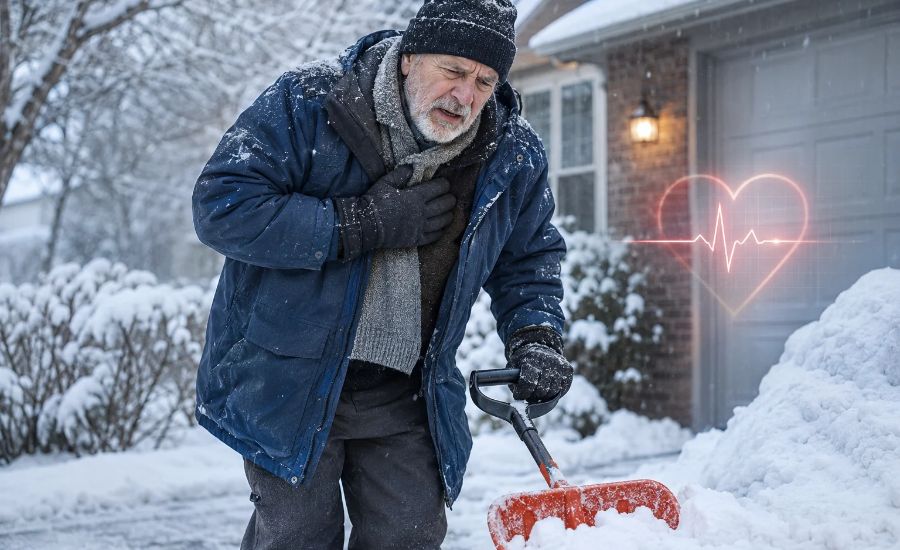

For millions of people, shoveling snow is simply another winter chore. However, what appears to be a harmless household activity can place enormous stress on the heart and, in certain circumstances, trigger a life-threatening medical emergency.
Cardiologists warn that the combination of freezing temperatures, sudden physical exertion, and lifting heavy snow can significantly increase cardiovascular strain.
While physically fit individuals may tolerate this activity well, people with underlying heart conditions, high blood pressure, or a sedentary lifestyle may be particularly vulnerable.
Perhaps most concerning is that some people may not even know they have an underlying cardiovascular problem until a medical emergency occurs.
Why Is Shoveling Snow So Dangerous for the Heart?
Shoveling snow combines several factors that can place considerable pressure on the cardiovascular system.
Exposure to cold temperatures causes blood vessels to constrict, increasing resistance to blood flow and potentially raising blood pressure.
At the same time, lifting and throwing heavy snow increases the heart’s demand for oxygen.
Unlike walking or cycling, shoveling involves substantial upper-body exertion. People also tend to hold their breath while lifting heavy loads, which can further increase blood pressure.
For someone with narrowed coronary arteries, this sudden increase in cardiovascular demand may create a dangerous imbalance between the oxygen the heart needs and the amount it receives.
In vulnerable individuals, this can contribute to a heart attack or cardiac arrest.
Research Links Heavy Snowfall to a Higher Risk of Fatal Heart Attacks
A major Canadian study published in the Canadian Medical Association Journal in 2017 examined the relationship between snowfall and heart attacks.
Researchers analyzed more than 128,000 hospital admissions and 68,000 deaths related to heart attacks in Quebec between 1981 and 2014.
The findings revealed that following approximately 20 centimeters (8 inches) of snowfall, men experienced:
- 16% higher odds of hospitalization due to a heart attack the following day.
- 34% higher odds of dying from a heart attack the following day.
Researchers suggested that strenuous snow removal could help explain this association.
However, the study was observational and did not establish whether the individuals affected had actually been shoveling snow.
On February 5, 2026, the American Heart Association again highlighted the cardiovascular dangers associated with snow shoveling, particularly for people unaccustomed to strenuous exercise.
7 Groups of People Who Should Think Twice Before Shoveling Snow
1. People With Heart Disease
Individuals with coronary artery disease, heart failure, angina, or a history of heart attacks may be particularly vulnerable to sudden, strenuous physical activity in freezing temperatures.
Even people whose heart conditions are well controlled should discuss strenuous winter activities with their doctors.
2. People With High Blood Pressure
Cold temperatures naturally cause blood vessels to narrow.
Combined with lifting heavy snow, this can cause blood pressure to rise considerably, placing additional strain on the heart and blood vessels.
People with uncontrolled hypertension should be especially cautious.
3. People Over the Age of 50
Cardiovascular risk generally increases with age.
Adults over 50 who have underlying cardiovascular risk factors or are not accustomed to regular physical activity may be particularly vulnerable.
Age alone, however, does not determine whether someone can safely shovel snow.
4. People Who Lead a Sedentary Lifestyle
Someone who rarely exercises may suddenly expose their heart to intense physical demands while clearing a driveway.
Regular physical activity helps condition the cardiovascular system, whereas sudden strenuous exertion may overwhelm an unconditioned body.
5. People With Diabetes
Diabetes can increase the likelihood of cardiovascular disease and damage blood vessels over time.
Some people with diabetes may also experience less noticeable heart attack symptoms, making it more difficult to recognize a developing emergency.
6. People Who Smoke or Have High Cholesterol
Smoking and elevated LDL cholesterol are established risk factors for coronary artery disease.
Individuals with these risk factors may have undiagnosed narrowing of the arteries, even if they generally feel healthy.
7. People With Obesity or Poor Physical Fitness
Shoveling heavy snow can increase oxygen demand, breathing rate, and cardiovascular workload.
People with poor physical conditioning, particularly those who have additional cardiovascular risk factors, may struggle to tolerate this sudden exertion.
Why Wet Snow Can Be Especially Dangerous
Not all snow presents the same level of physical difficulty.
Wet snow is considerably heavier than light, powdery snow because of its higher water content.
Repeatedly lifting heavy, wet snow can turn an ordinary household chore into an intense full-body workout.
The situation can become more demanding when people rush to clear their driveways, take insufficient breaks, or continue working despite experiencing exhaustion.
Warning Signs You Should Never Ignore While Shoveling Snow
A heart attack does not always begin with dramatic chest pain. Sometimes, the earliest symptoms are relatively subtle.
Pay particular attention to:
- Chest pain, pressure, tightness, or discomfort
- Unusual shortness of breath
- Pain spreading to the arm, shoulder, back, neck, or jaw
- Sudden dizziness or lightheadedness
- Nausea or vomiting
- Cold sweating
- Unexplained or extreme fatigue
- Sudden weakness
If any of these symptoms suggest a heart attack, stop immediately and call emergency medical services.
Do not attempt to finish clearing the snow, wait for the symptoms to disappear, or drive yourself to the hospital.
Can Using a Snowblower Eliminate the Risk?
Although a snowblower may reduce the need to lift heavy snow, it does not completely eliminate cardiovascular risk.
Pushing heavy equipment, maneuvering through deep snow, and working outdoors in freezing temperatures can still place considerable demands on the heart.
People with significant cardiovascular conditions may be better off arranging for someone else to clear their driveways.
How to Shovel Snow More Safely
For individuals who are physically capable of shoveling snow, several precautions may help reduce unnecessary cardiovascular strain.
- Warm up with gentle movements before going outside.
- Push snow rather than repeatedly lifting and throwing it.
- Use a smaller shovel to reduce the weight of each load.
- Take frequent breaks.
- Avoid holding your breath while lifting.
- Wear warm, layered clothing.
- Clear snow gradually rather than waiting for large accumulations.
- Avoid shoveling immediately after a heavy meal or drinking alcohol.
- Stay hydrated.
- Stop immediately if you experience unusual discomfort or breathlessness.
Individuals with known heart disease or significant cardiovascular risk factors should seek medical advice before undertaking strenuous snow removal.
Feeling Healthy Does Not Always Mean Your Heart Is Healthy
One of the most concerning aspects of cardiovascular disease is that it can develop gradually without noticeable symptoms.
A person may feel perfectly fine while performing ordinary daily activities but experience problems when the heart is suddenly exposed to intense physical demands.
This is why regular blood pressure measurements, cholesterol testing, cardiovascular risk assessments, and appropriate medical checkups are important.
Regular exercise remains beneficial for cardiovascular health. The concern is not physical activity itself, but sudden, intense exertion in individuals who may be unprepared for it.
Final Thoughts
Shoveling snow may seem like an unavoidable part of winter, but it should not come at the expense of your health.
For most healthy, physically active individuals, clearing snow at a reasonable pace may not present a significant problem. However, for people with underlying cardiovascular conditions or poor physical conditioning, the combination of freezing temperatures and strenuous exertion can have serious consequences.
Listen to your body, recognize the warning signs, and never allow the pressure of finishing a household chore to override your health.
Your driveway can wait. A medical emergency cannot.



Leave a Reply
You must be logged in to post a comment.