
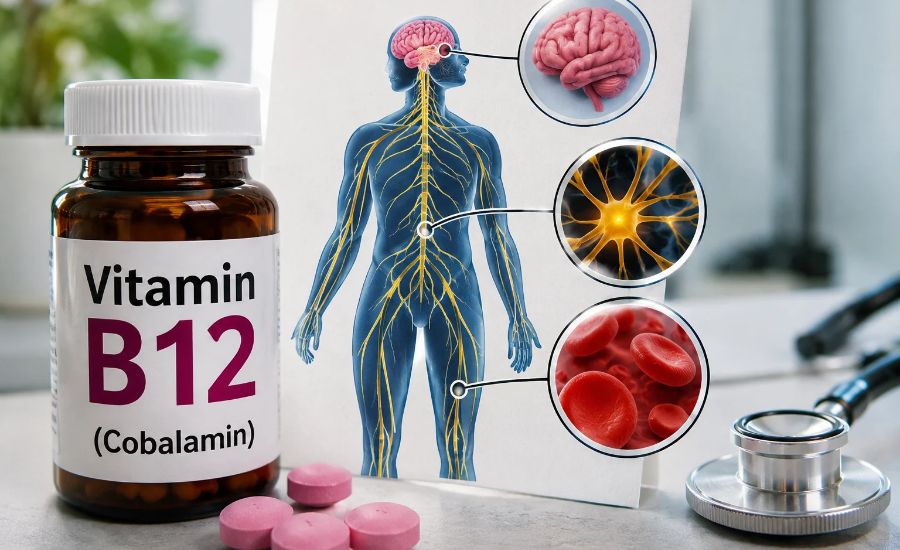

What if your persistent exhaustion, forgetfulness, tingling fingers, or unexplained mood changes were not simply signs of stress or aging, but symptoms of a vitamin deficiency affecting your nervous system?
Vitamin B12 is one of the most important nutrients for human health, yet its deficiency can develop gradually and remain unnoticed for years.
Unlike some nutritional deficiencies, a prolonged lack of vitamin B12 can affect the brain, spinal cord, and peripheral nerves, potentially causing permanent neurological damage if left untreated.
Even more surprisingly, you can consume plenty of vitamin B12-rich foods and still develop a deficiency if your body cannot absorb the nutrient properly.
Recognizing the warning signs early could make a significant difference.
Why Is Vitamin B12 So Important?
Vitamin B12, also known as cobalamin, is a water-soluble vitamin involved in several essential biological processes, including:
- Red blood cell production
- DNA synthesis
- Normal nervous system function
- Cellular energy metabolism
- Maintenance of the protective myelin sheath surrounding nerves
- Normal brain function
- Homocysteine metabolism
The body can store substantial amounts of vitamin B12, primarily in the liver. Consequently, symptoms of deficiency may take several years to become noticeable.
10 Warning Signs of Vitamin B12 Deficiency
1. Constant Fatigue and Exhaustion
Do you wake up feeling exhausted even after getting enough sleep?
Vitamin B12 deficiency can interfere with red blood cell production, reducing the body’s ability to deliver oxygen efficiently to tissues.
This may contribute to persistent tiredness, weakness, and reduced physical endurance.
2. Tingling or Numbness in Your Hands and Feet
One of the most concerning symptoms of vitamin B12 deficiency is a persistent sensation of pins and needles.
Vitamin B12 helps maintain myelin, the protective covering surrounding nerve fibers.
When this protective layer becomes compromised, nerve signals may be disrupted, resulting in numbness, burning sensations, or tingling in the extremities.
3. Brain Fog and Memory Problems
Frequently forgetting words, struggling to concentrate, or experiencing unusual mental confusion could have several underlying causes, including vitamin B12 deficiency.
Because B12 supports normal neurological function, inadequate levels may affect cognitive performance.
These symptoms may sometimes be mistaken for age-related cognitive decline.
4. A Red, Smooth, or Painful Tongue
Your tongue may provide important clues about your nutritional status.
Vitamin B12 deficiency can cause glossitis, a condition characterized by inflammation, tenderness, redness, and changes in the tongue’s surface.
Some individuals may also experience a burning sensation inside the mouth.
5. Pale or Yellowish Skin
Vitamin B12 deficiency can contribute to megaloblastic anemia, a condition involving abnormally large and immature red blood cells.
This may result in pale skin or, in some cases, a yellowish complexion due to increased breakdown of abnormal blood cells.
6. Unexplained Mood Changes
Persistent irritability, depression, anxiety, or emotional changes can sometimes accompany vitamin B12 deficiency.
The vitamin participates in metabolic processes important for neurological and psychological function.
However, mood disorders have numerous potential causes, and vitamin B12 supplementation is not a substitute for appropriate mental health treatment.
7. Difficulty Walking or Maintaining Balance
In more advanced cases, vitamin B12 deficiency can affect the spinal cord and peripheral nerves.
This may interfere with coordination, stability, and the ability to sense the position of the limbs.
Some individuals may experience difficulty walking, increased clumsiness, or unexpected falls.
8. Heart Palpitations and Shortness of Breath
When vitamin B12 deficiency causes anemia, the heart may work harder to compensate for reduced oxygen delivery.
This can contribute to a racing heartbeat, breathlessness, dizziness, or reduced exercise tolerance.
9. Blurred Vision
Although less common, severe vitamin B12 deficiency can affect the optic nerve, potentially interfering with normal vision.
Persistent or sudden visual changes require prompt medical evaluation.
10. Unexplained Muscle Weakness
Vitamin B12 deficiency may contribute to muscle weakness through anemia, impaired nerve function, or a combination of both.
Everyday activities such as climbing stairs, carrying groceries, or walking longer distances may become increasingly difficult.
Why You Can Develop Vitamin B12 Deficiency Even With a Healthy Diet
Not every vitamin deficiency is caused by inadequate nutrition.
In some cases, the problem lies in the digestive system’s ability to absorb the nutrient.
Autoimmune Gastritis and Pernicious Anemia
The stomach produces a protein called intrinsic factor, which is essential for normal vitamin B12 absorption.
In autoimmune gastritis, the immune system attacks cells in the stomach responsible for producing intrinsic factor and gastric acid.
This can severely compromise B12 absorption and may eventually cause pernicious anemia.
Long-Term Use of Certain Medications
Some commonly prescribed medications may interfere with vitamin B12 absorption, particularly when taken over extended periods.
These include metformin, proton pump inhibitors, and certain other acid-reducing medications.
Patients should not discontinue prescribed medication without consulting their healthcare provider.
Digestive Disorders
Certain gastrointestinal conditions can interfere with nutrient absorption, including celiac disease, Crohn’s disease, and conditions affecting the terminal ileum.
Some types of gastrointestinal surgery may also increase the risk of deficiency.
Vegetarian and Vegan Diets
Vitamin B12 naturally occurs primarily in animal-derived foods.
People following strict plant-based diets without adequate fortified foods or supplements are particularly vulnerable to deficiency.
Vegetarians who consume insufficient quantities of eggs and dairy products may also be at risk.
Aging
As people grow older, changes in stomach acid production and digestive function may reduce their ability to absorb vitamin B12 from food.
This makes older adults particularly susceptible to deficiency, even when their dietary intake appears adequate.
The Hidden Danger: Vitamin B12 Deficiency Without Anemia
Many people assume that a normal blood count means their vitamin B12 levels are adequate.
However, neurological complications can develop even in the absence of anemia.
This means someone may experience numbness, memory difficulties, or balance problems without the typical blood abnormalities associated with vitamin B12 deficiency.
Early diagnosis is particularly important because prolonged neurological damage may not always be fully reversible.
The Best Natural Food Sources of Vitamin B12
| Food | Approximate B12 per serving |
|---|---|
| Beef liver, 85 g | 70.7 mcg |
| Cooked clams, 85 g | 17 mcg |
| Cooked salmon, 85 g | 2.6 mcg |
| Canned light tuna, 85 g | 2.5 mcg |
| Ground beef, 85 g | 2.4 mcg |
| Whole milk, 1 cup | 1.3 mcg |
| Plain yogurt, 170 g | 1 mcg |
| One large cooked egg | 0.5 mcg |
Fortified nutritional yeast, breakfast cereals, and certain plant-based milk alternatives can also provide vitamin B12.
Most adults require approximately 2.4 micrograms of vitamin B12 daily. Requirements increase slightly during pregnancy and breastfeeding.
How Can You Find Out If You Are Deficient?
Healthcare professionals may recommend several laboratory tests when vitamin B12 deficiency is suspected:
- Serum vitamin B12
- Active vitamin B12 (holotranscobalamin)
- Complete blood count (CBC)
- Methylmalonic acid (MMA)
- Homocysteine
- Intrinsic factor antibodies, when autoimmune gastritis is suspected
Methylmalonic acid testing may be particularly useful when initial vitamin B12 results are borderline.
Ideally, diagnostic blood samples should be collected before starting supplementation, although treatment should not be delayed when serious neurological complications are suspected.
Can Vitamin B12 Deficiency Be Reversed?
Treatment depends on the underlying cause and severity of the deficiency.
People with insufficient dietary intake may respond well to dietary changes and oral vitamin B12 supplements.
Those with significant absorption problems or neurological complications may require higher-dose oral supplementation or vitamin B12 injections.
Some individuals, particularly those with irreversible absorption disorders, may need lifelong treatment.
While many symptoms improve with appropriate treatment, neurological recovery can take months, and longstanding nerve damage may be permanent.
Final Thoughts
Vitamin B12 deficiency is more than a nutritional inconvenience. Left untreated, it can have serious consequences for the blood, brain, and nervous system.
Persistent exhaustion, tingling extremities, memory problems, and unexplained weakness should not automatically be dismissed as stress, aging, or the demands of everyday life.
These symptoms do not necessarily mean you have a vitamin B12 deficiency, but they deserve attention when they persist.
Sometimes, what feels like your body getting older may actually be your body struggling with a deficiency that can be identified and treated.




Leave a Reply
You must be logged in to post a comment.