
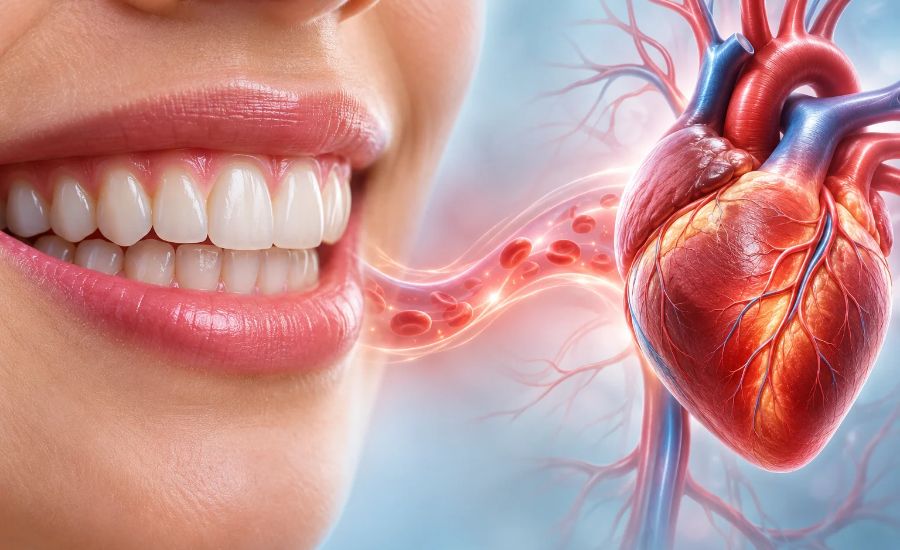

When you think about protecting your heart, you probably think about eating healthier, exercising, managing stress, and keeping your blood pressure under control. But what about brushing your teeth?
Although your teeth and heart may seem completely unrelated, they share a surprising biological connection involving bacteria, blood vessels, inflammation, and the immune system.
Research has consistently found an association between poor oral health, particularly gum disease, and cardiovascular disease.
Could what happens inside your mouth influence what happens inside your arteries? The answer is more fascinating than you might expect.
Your Mouth Is Home to an Entire World of Bacteria
The human mouth contains hundreds of different bacterial species. Many are harmless or beneficial, helping maintain a balanced oral environment.
However, when harmful bacteria multiply excessively, they can contribute to plaque buildup, tooth decay, gum inflammation, and infection.
If plaque accumulates along the gumline, it may cause gingivitis, an early stage of gum disease. Left untreated, gingivitis can progress to periodontitis, a more serious condition that damages the tissues and bones supporting the teeth.
But the consequences of periodontal disease may extend far beyond your mouth.
Can Bacteria From Your Mouth Travel to Your Heart?
Your gums contain a network of small blood vessels. When they become inflamed or damaged, oral bacteria can enter your bloodstream.
Once there, bacteria and their components may interact with blood vessels and trigger immune responses elsewhere in the body.
Scientists have even detected certain bacteria associated with periodontal disease in atherosclerotic plaques inside arteries.
One particularly interesting bacterium is Porphyromonas gingivalis, which is strongly associated with periodontitis and is being investigated for its potential role in vascular inflammation.
However, detecting these bacteria in arterial plaques does not necessarily mean they caused the plaques to develop.
Inflammation: The Hidden Connection Between Your Teeth and Heart
Perhaps the most important connection between oral health and cardiovascular health is chronic inflammation.
When your gums are constantly inflamed, your immune system produces inflammatory signaling molecules to respond to the problem.
Some of these molecules can circulate throughout the body, potentially contributing to systemic inflammation.
Chronic inflammation is also involved in atherosclerosis, a condition characterized by the accumulation of cholesterol, inflammatory cells, and other substances within artery walls.
Over time, atherosclerosis can restrict blood flow and increase the risk of heart attacks and strokes.
This shared inflammatory mechanism is one reason scientists are increasingly interested in the relationship between gum disease and cardiovascular health.
What Does Scientific Research Say?
The American Heart Association has examined the relationship between periodontal disease and cardiovascular disease in scientific statements published in the medical journal Circulation.
Research has identified associations between periodontal disease and several cardiovascular conditions, including:
- Coronary artery disease
- Heart attacks
- Stroke
- Heart failure
- Atrial fibrillation
- Atherosclerosis
Researchers have identified several possible mechanisms, including the movement of oral bacteria into the bloodstream, inflammation throughout the body, and dysfunction of the inner lining of blood vessels.
However, a direct causal relationship has not yet been established.
In other words, having gum disease does not automatically mean you will develop heart disease. Similarly, treating gum disease has not yet been conclusively proven to prevent heart attacks or strokes.
Could Oral Bacteria Actually Infect Your Heart?
While the relationship between gum disease and atherosclerosis remains under investigation, there is another, more directly established connection between oral bacteria and the heart.
It involves a rare but potentially life-threatening condition called infective endocarditis.
This condition occurs when microorganisms enter the bloodstream and infect the heart’s inner lining or valves.
Certain people are particularly vulnerable, including those with artificial heart valves, a history of infective endocarditis, and certain congenital heart abnormalities.
Oral bacteria can enter the bloodstream during everyday activities such as chewing, brushing, and flossing, as well as during certain dental procedures.
For this reason, maintaining good oral hygiene is particularly important for people with specific heart conditions. Some high-risk patients may also require preventive antibiotics before certain dental procedures, as determined by their healthcare professionals.
Could Gum Disease Be a Warning Sign of Other Health Problems?
Your mouth can sometimes provide valuable clues about your overall health.
Persistent gum inflammation may coexist with conditions such as diabetes, obesity, and cardiovascular disease.
Interestingly, gum disease and cardiovascular disease also share several common risk factors:
- Smoking
- Poorly controlled diabetes
- Unhealthy dietary habits
- Increasing age
- Limited access to preventive healthcare
- Obesity
These overlapping risk factors may partly explain why people with periodontal disease are more likely to experience cardiovascular problems.
This is why healthcare professionals increasingly encourage people to view oral health as an integral part of their general health rather than as an entirely separate concern.
8 Warning Signs of Gum Disease You Should Never Ignore
Gum disease can develop gradually and may remain painless until significant damage has occurred.
Common warning signs include:
- Bleeding gums when brushing or flossing.
- Persistent bad breath.
- Red, swollen, or tender gums.
- Receding gums.
- Loose or shifting teeth.
- Pain or discomfort when chewing.
- Increased tooth sensitivity.
- Persistent changes in your bite.
Bleeding gums should not automatically be considered normal, especially when they occur regularly.
Early diagnosis and appropriate dental treatment can help prevent periodontal disease from progressing and protect the structures supporting your teeth.
How to Protect Your Oral and Cardiovascular Health
Many everyday habits that support healthy gums also complement a heart-healthy lifestyle.
Brush Your Teeth Twice Daily
Use a soft-bristled toothbrush and fluoride toothpaste to remove plaque and help prevent tooth decay.
Clean Between Your Teeth
Floss or use interdental brushes daily to remove plaque from areas your toothbrush cannot easily reach.
Eat More Nutrient-Dense Foods
Vegetables, fruits, legumes, nuts, seeds, and other nutrient-rich foods provide vitamins, minerals, and antioxidants that support normal immune function and overall health.
Vitamin C is particularly important for collagen production and healthy connective tissues, including the gums.
Reduce Added Sugar
Frequent consumption of sugary foods and beverages encourages acid-producing bacteria that contribute to tooth decay.
Avoid Tobacco
Smoking is a major risk factor for both periodontal disease and cardiovascular disease.
Schedule Regular Dental Checkups
Professional dental examinations and cleanings can identify early signs of gum disease and remove hardened plaque that cannot be eliminated through ordinary brushing.
Monitor Your Cardiovascular Health
Keep track of your blood pressure, cholesterol, and blood sugar, exercise regularly, and follow appropriate medical advice.
Good oral hygiene complements these measures but does not replace them.
Can Natural Remedies Support Gum Health?
Certain natural approaches, such as warm saltwater rinses, may temporarily soothe irritated gums.
Compounds found in green tea, turmeric, and some medicinal herbs are also being investigated for their potential effects on oral bacteria and inflammation.
Nevertheless, the available evidence varies considerably, and natural remedies cannot remove hardened tartar, reverse advanced periodontal damage, or replace professional dental treatment.
Avoid relying exclusively on herbal remedies when experiencing persistent bleeding, swelling, or signs of infection.
Final Thoughts
Your teeth and heart may be physically distant, but they are connected through your bloodstream, immune system, and inflammatory processes.
What happens in your mouth does not necessarily stay in your mouth.
Although scientists are still investigating the precise relationship between periodontal disease and cardiovascular disease, one thing is clear: oral health deserves more attention as part of overall preventive healthcare.
Taking care of your teeth is not simply about maintaining a beautiful smile. It is about protecting an important part of a remarkably interconnected human body.
The next time you brush your teeth, remember that you are doing more than keeping your smile clean. You are investing in your overall health.




Leave a Reply
You must be logged in to post a comment.